
- Targeted Reception and Buffering
An infeed hopper tailored to your bulk process
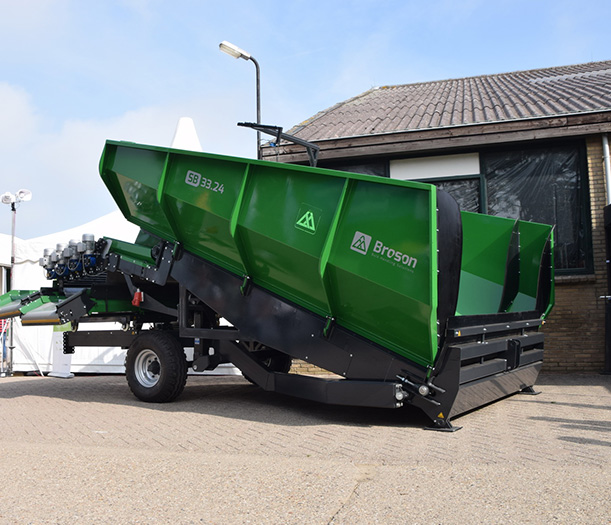
Broson develops infeed hoppers for receiving, buffering, and controlled feeding of bulk materials. Each model is tailored to your product, desired capacity, available space, and integration with downstream machines in your overall bulk processing system. This ensures a suitable product feed system.
What does an infeed hopper do?
An infeed hopper is often the first receiving point in a bulk-handling system. The machine collects bulk material, provides temporary buffer capacity, and feeds the material in a controlled manner to the next process step. This could be, for example, a gooseneck belt, a sorting machine, or another processing machine. Broson tailors the design to the product, the feed method, the desired capacity, and the available space. This allows the infeed hopper to be used as a standalone machine or integrated with other [bulk handling machines] within a complete system.
Receives bulk goods directly from a vehicle or a feed line
Creates a buffer between the incoming supply and the subsequent process
Regulates the flow of material to processing machines
- Control Over Product Supply
Consistent feed to downstream machines
By temporarily storing bulk material and discharging it in controlled batches, an infeed hopper helps smooth out peaks in the inflow. This creates a more manageable product flow toward the [gooseneck belt], sorting system, or other downstream equipment in your process.
Temporary buffering between receipt and further processing
Consistent product feed to your connected machines
Tailored to product characteristics, capacity, and work environment
- Built to Meet Your Needs
An infeed hopper tailored to your bulk process
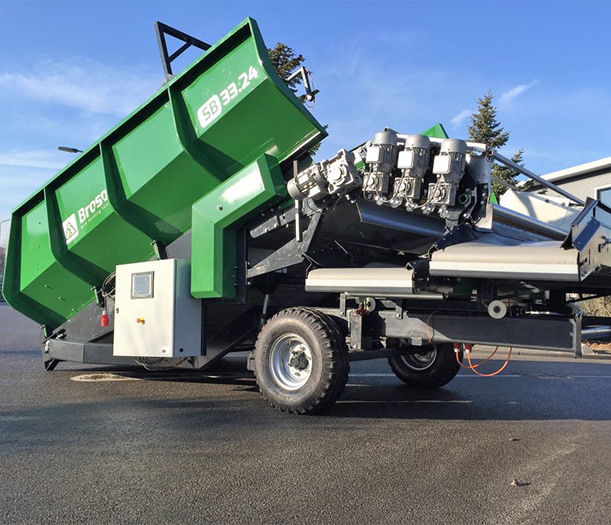
Length and width are tailored to your available space and intended use. Capacity, automatic capacity control, and variable belt speed are also configurable.
Depending on the application and product characteristics, Broson selects either smooth rubber or PVC for the belt material.
Product Information infeed hoppers
Would you like more product information about the Broson Infeed Hopper? Click the button below to download the brochure.
Frequently Asked Questions About infeed hoppers
What is an infeed hopper, and what is it used for?
An infeed hopper is a machine designed to receive, temporarily store, and feed bulk materials in a controlled manner. The infeed hopper compensates for variations between the feed rate and subsequent processing. This allows bulk materials to be fed more evenly to, for example, a gooseneck belt, sorting machine, or other downstream equipment. The exact design depends on the product, the desired capacity, the available space, and how the infeed hopper is used within the process.
What is the difference between an infeed hopper, a feed hopper, and a hopper?
These machines are all capable of receiving bulk materials, but their function and design vary depending on the process. An infeed hopper is typically used for receiving, buffering, and regulating the flow of larger product streams. A [feed hopper] is primarily designed for targeted feeding into the next machine. A [hopper] also provides buffering and feeding capacity. The appropriate solution is determined by product characteristics, feed method, capacity, available space, and desired connections.
For which products can Broson build an infeed hopper?
Broson has supplied machinery for a wide range of bulk products and materials, including agricultural products, sand, gravel, fertilizer, plastics, paper, and waste streams. That does not mean that every standard model is automatically suitable for every material. Weight, dimensions, moisture content, contamination, fragility, and flow behavior can all influence the design. That is why Broson carefully assesses the product characteristics and process conditions before recommending a model for your application.
What are the possible dimensions and capacities of an infeed hopper?
Length, width, and capacity are tailored to the available space, the feed method, and the desired product flow. Broson therefore does not use a single fixed size or capacity for every application. The connection to gooseneck belts or other machines is also a factor. By discussing these considerations in advance, a standard model can be customized, or an infeed hopper can be developed entirely to order.
How is the product flow from the infeed hopper controlled?
The feed rate can be adjusted using a variably adjustable belt speed and, when the application requires it, automatic capacity control. This allows the discharge from the hopper to be tailored to the next process step. The choice of belt material also plays an important role. Depending on the product and the operating environment, Broson can use smooth rubber or PVC. The technical configuration is determined on a case-by-case basis.
Can I buy, rent, or have an infeed hopper custom-built?
Broson supplies infeed hoppers as machines and also offers customization options and equipment rental. Purchasing is suitable for long-term use within your process; renting may be relevant for seasonal work, a temporary project, or additional capacity. Which option makes the most sense depends on the duration of use, the desired configuration, and availability. Describe your product and application, and Broson will discuss the appropriate standard, custom, or rental option with you.
- Why Broson
Technology That Fits
In-house machine manufacturing
Engineering, production, assembly, and installation remain integrated within Broson, ensuring that technical decisions align with your organization’s original needs.
Process-Oriented Design
Broson evaluates the product, capacity, space, and downstream equipment in conjunction with one another and translates these principles into a functional infeed hopper for your process.
Coordinating Together
You will discuss your application, after which we will work together to carefully evaluate the standard options and any necessary modifications before moving on to the technical phase.
- Custom-developed
A machine that fits your process
A custom project begins with an assessment of your specifications, production environment, and goals. Broson translates these parameters into a design, coordinates decisions with you, and then builds the machine entirely in-house—from engineering and manufacturing to assembly.
- Flexible and practical
Rent equipment for temporarylarge-scale projects
- Cost-Effective Expansion
Used Machines
for small investments
- Technology in Motion
Service and Maintenance
Even after delivery, you can rely on Broson for service, maintenance, repairs, and technical modifications. We support various types of machines and systems, so you have a single, convenient point of contact for the technical condition and continued operation of your equipment.
- Contact
Working Together to Find a Machine Suitable for
machine
Discuss your product, process, and technical questions with Broson. We’ll work with you to find the right solution, whether it’s a standard machine, a customized model, or a custom-built solution.
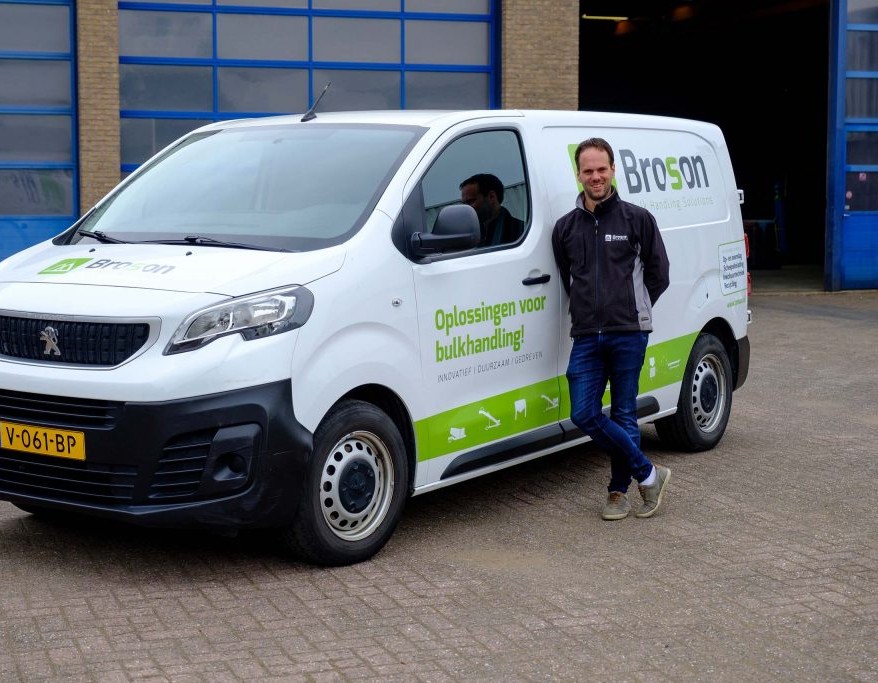
We'd be happy to work with you to find a solution!
Marnik Brosens
Director of Broson